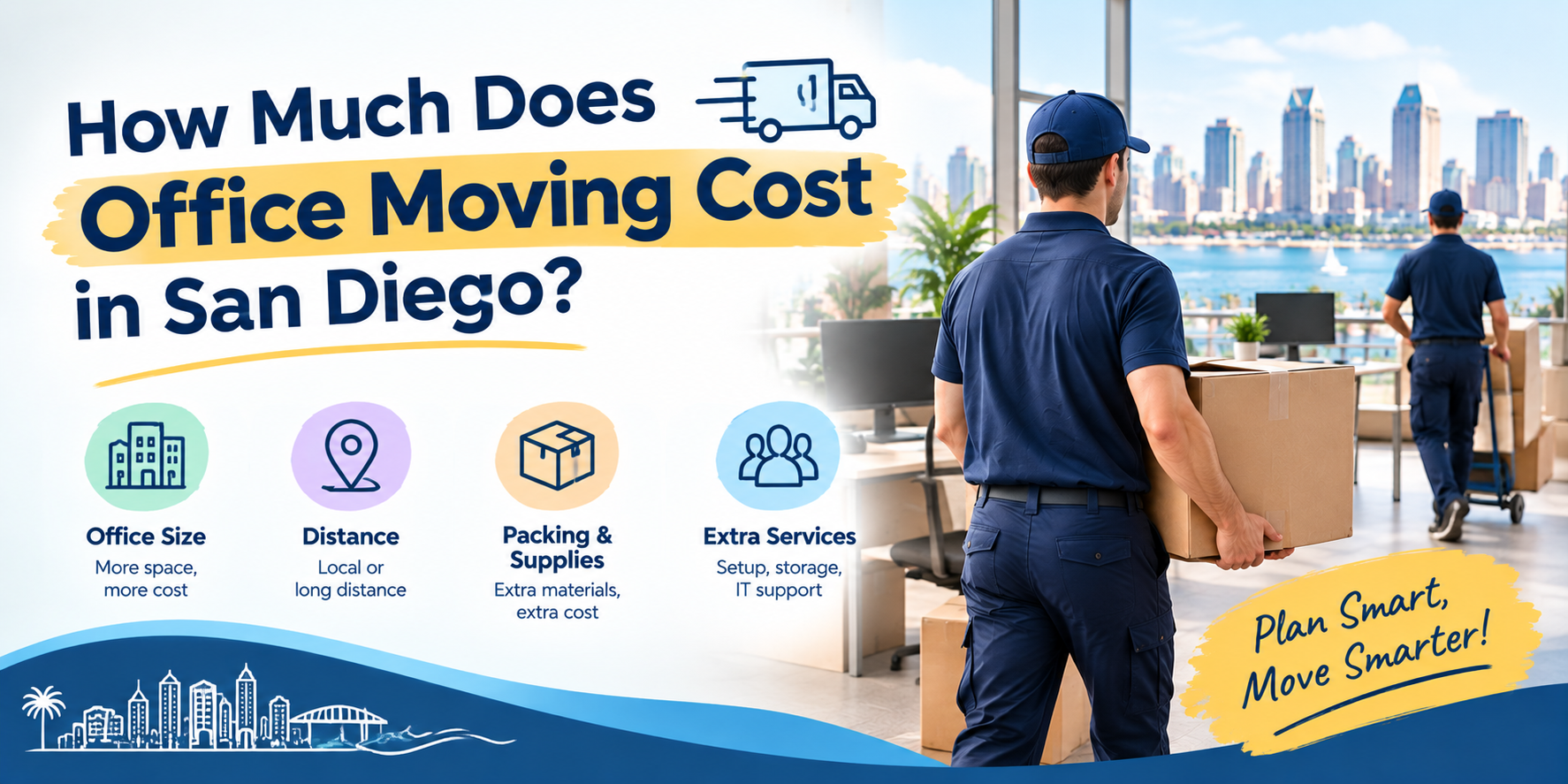
Planning a move from San Diego to another city or state can be exciting, but understanding the cost is an important part of preparing for the transition. Long-distance moving involves more than transporting furniture from one address to another. The size of your shipment, distance to your destination, packing requirements, transportation arrangements, and delivery schedule can all affect the final price.
If you are comparing long distance movers in San Diego, you may notice that estimates vary significantly between companies. One mover might offer a basic transportation service, while another includes packing, furniture protection, storage, and additional handling. Comparing these services carefully can help you understand what you are paying for and avoid unexpected expenses.
Whether you are moving to Arizona, Texas, another part of California, or across the country, this guide explains typical long-distance moving costs, the factors that influence pricing, and practical ways to plan your relocation budget.
How Much Do Long Distance Movers Cost From San Diego?
Long-distance moving costs depend primarily on the amount of belongings being transported, the distance to the destination, and the services included in the move. Published 2026 estimates show that a long-distance move from San Diego can range from a few thousand dollars for some smaller or shorter-distance moves to more than $10,000 for larger shipments or cross-country relocations. <Cite refs={[“turn281951search1″,”turn281951search5″,”turn281951search11”]} />
The following table provides broad budgeting estimates for full-service household moves. These figures are general planning ranges, not guaranteed prices or quotes from US Eagle Moving.
| Destination | General Budget Consideration |
|---|---|
| Nearby destinations in California, Nevada, or Arizona | Often less expensive than cross-country routes, depending on shipment size |
| Texas, Colorado, or the Pacific Northwest | Costs vary with distance, shipment weight, and service level |
| Midwest destinations | Longer transportation distances can increase the overall price |
| East Coast destinations | Cross-country distance and larger shipments can lead to higher costs |
The size of your home also matters. A studio apartment with a limited number of belongings will usually cost less to move than a four-bedroom house containing large furniture, appliances, and many packed boxes.
For a more accurate estimate, provide your moving company with the destination address, inventory, preferred dates, and required services. A written estimate based on a proper assessment is more useful than a general online price range.
1. Distance Between San Diego and Your Destination
Distance is one of the main factors affecting long-distance moving costs. Transporting belongings to a nearby city generally involves less travel than moving them across the United States.
For example, a relocation from San Diego to Los Angeles is considerably shorter than a move to Chicago or New York City. However, distance alone does not determine the price. The amount being transported, route conditions, delivery arrangements, and type of moving service also influence the estimate.
Long-distance moves that cross state lines may involve different regulatory requirements from moves that remain within California. Your moving company should explain the applicable arrangements and identify the services included in its quote.
When requesting estimates, provide the complete pickup and delivery addresses. If you are moving into an apartment or a property with restricted truck access, mention those details as well.
Accurate route information helps movers assess transportation requirements and provide a more realistic estimate for your relocation.
2. The Size of Your Home and Shipment
The number of belongings you plan to move can have a significant effect on the cost. Larger shipments generally require more transportation capacity, handling, and preparation.
A studio apartment may contain a bed, a few pieces of furniture, clothing, and several boxes. A family home may include multiple bedrooms, sofas, dining furniture, appliances, outdoor equipment, and a much larger inventory.
For interstate household moves, pricing commonly takes shipment weight and mileage into account, although the exact method depends on the service and agreement. Other moving options may use different pricing structures.
Before requesting a quote, prepare a list of the major items you intend to transport. You can also identify belongings that will be sold, donated, or left behind.
Reducing unnecessary items before the move may lower transportation and packing requirements. It also makes unpacking at your new home easier.
3. Packing and Unpacking Services
Packing is another factor that can increase your long-distance moving budget. Some customers pack everything themselves, while others prefer professional assistance with most or all of their belongings.
Full-service packing can be useful when you have a large household, fragile possessions, limited preparation time, or complicated furniture arrangements. Partial packing allows you to pack ordinary belongings yourself while leaving selected items to professional packers.
The cost may depend on the number of boxes, materials required, labor time, and whether special packaging is needed.
When comparing quotes, ask whether packing supplies, wrapping, furniture protection, and unpacking are included. Do not assume that a transportation-only estimate covers these services.
If you plan to pack independently, start early and label boxes by room. Keep important documents, valuable personal items, and essentials separate from the shipment so they remain accessible during the journey.
4. Furniture Disassembly and Special Handling
Some belongings require more preparation than standard boxes and furniture. Large beds, modular desks, oversized sofas, glass tables, and certain shelving systems may need to be disassembled before transportation.
Special handling may also be necessary for pianos, antiques, artwork, fragile collectibles, or unusually heavy items.
These requirements can affect the amount of labor, packing materials, and equipment needed for the move. In some cases, specialized transportation or crating may be recommended.
Make a list of items that need extra attention and share it with your moving company before accepting an estimate. Ask which services are included and whether any special handling charges apply.
Planning for these belongings early helps prevent misunderstandings and makes it easier to compare moving quotes accurately.
5. Moving Date and Seasonal Demand
The time of year can influence moving company availability and pricing. Summer is a busy moving season in many parts of the United States, partly because families prefer to relocate while children are out of school.
End-of-month dates can also be popular because many residential leases begin or end around that time. If several customers need similar pickup or delivery dates, availability may become more limited.
If your schedule is flexible, ask movers about alternative dates. A weekday or mid-month move may offer more scheduling options, although savings are not guaranteed.
Once you identify a suitable date, confirm the pickup arrangements and estimated delivery window in writing. Avoid making important travel plans based on a delivery date that the moving company has not confirmed.
Booking early can give you more time to compare services, organize packing, and coordinate your move without unnecessary pressure.
6. Storage and Delivery Arrangements
Your moving costs may increase if your belongings cannot be delivered directly to your new home.
For example, you may need to leave your current property before the new home is ready. Renovations, delayed closing dates, lease changes, or temporary accommodation can create a gap between pickup and delivery.
In these situations, ask whether the moving company offers storage or coordinates with a storage provider. Confirm the storage rate, minimum duration, access arrangements, and any additional handling or transportation charges.
You should also clarify how storage affects the delivery schedule. Some arrangements may involve moving belongings into storage and transporting them again when your destination becomes available.
If you already know that your dates do not line up, mention this when requesting the original estimate. Planning storage in advance can help you understand the total cost rather than treating it as an unexpected expense later.
7. Building Access and Difficult Pickup Locations
Access at your current and new properties can affect the time and equipment required for a move.
A ground-floor home with a driveway may be straightforward to access. An apartment in a busy downtown area may have limited parking, elevator reservations, security procedures, or restrictions on large moving trucks.
Some locations may require a smaller shuttle vehicle if the main truck cannot reach the property. Long carrying distances, stairs, and restricted loading areas can also affect labor requirements.
Before booking, check the moving rules at both properties. Ask building management about loading zones, elevator reservations, parking permits, and any required insurance documentation.
Share this information with your movers so they can assess the situation before the moving date.
Planning access arrangements in advance can reduce delays and help avoid charges related to unexpected logistical requirements.
8. Moving Insurance and Valuation Coverage
Protecting your belongings is an important consideration during a long-distance relocation. Furniture, electronics, appliances, and personal possessions may travel hundreds or thousands of miles before reaching their destination.
Ask your moving company to explain the liability or valuation options available for your particular move. For interstate household moves, applicable federal rules generally require movers to offer certain valuation options, including released-value and full-value protection, subject to their terms and conditions.
These options do not necessarily provide the same level of protection. Review the written terms, exclusions, limitations, and claims procedures carefully.
Create an inventory of valuable items and photograph their condition before the move where appropriate. If you own expensive artwork, antiques, or specialty equipment, discuss the requirements with your mover before transportation begins.
Do not assume that every item will automatically be covered for its full replacement cost. Understanding the available protection helps you make an informed decision about your belongings.
9. Additional Fees to Check Before Booking
The initial estimate may not include every service or expense associated with your relocation. Before signing an agreement, ask whether any additional charges could apply.
Potential costs may include:
- Professional packing and packing materials.
- Furniture disassembly and reassembly.
- Specialty handling for fragile or oversized items.
- Storage between pickup and delivery.
- Shuttle service when a large truck cannot reach the property.
- Additional handling due to stairs or difficult access.
- Changes to the inventory or requested services.
- Additional delivery arrangements outside the original plan.
Not every move will require these services. The purpose of reviewing them is to understand which costs apply to your particular circumstances.
Request a written breakdown and ask the company to explain how changes are priced. Make sure you understand the payment schedule and any conditions that could affect the final amount.
A clear estimate makes it easier to compare providers and plan your budget with confidence.
10. Full-Service Movers vs. DIY Moving
Hiring full-service long-distance movers is not the only way to relocate. Depending on your circumstances, you may consider a rental truck, a portable moving container, or a combination of professional labor and self-managed transportation.
Full-service movers generally handle transportation and the agreed moving tasks. This option can reduce the amount of physical work you need to do, but it may cost more than managing parts of the move yourself.
A rental truck can provide more control over the schedule, although you must account for driving, fuel, mileage, equipment, and the effort of loading and unloading.
A portable container may suit customers who want to pack at their own pace. However, delivery, collection, storage, and transportation charges need to be included in the comparison.
The best option depends on the shipment size, destination, time available, and how much work you are prepared to manage personally. Compare the total expected cost rather than considering only the advertised base price.
11. How to Save Money on a Long-Distance Move From San Diego
You do not necessarily need to choose the cheapest moving company to control relocation costs. A well-organized move can help reduce unnecessary labor, transportation space, and additional services.
Declutter Before Packing
Review your belongings and identify items you no longer use. Selling, donating, or responsibly disposing of unnecessary possessions can reduce the size of your shipment.
Compare Multiple Written Estimates
Request estimates from several qualified moving companies using the same inventory, destination, and service requirements. This makes it easier to identify differences in pricing and included services.
Choose Your Services Carefully
Decide which packing tasks you can complete yourself and which require professional help. Make sure your approach is practical for your schedule and the type of belongings being transported.
Stay Flexible With Your Moving Date
If possible, compare more than one pickup date. Ask movers whether their availability or pricing differs across your preferred dates.
Confirm Your Inventory
Tell the company about large furniture, appliances, and specialty items before the estimate is finalized. Adding significant items later may change the shipment requirements and price.
Understand the Contract
Review the estimate, service terms, delivery arrangements, and payment conditions before signing. Knowing what is included can help prevent avoidable expenses and misunderstandings.
12. How to Get an Accurate Long-Distance Moving Quote
Online calculators can provide a starting point, but they cannot always account for the specific details of your relocation. An accurate estimate requires information about the shipment, route, service level, and access conditions.
Prepare the following details before contacting movers:
- Pickup address in San Diego.
- Complete destination address.
- Preferred moving date.
- Inventory of furniture, appliances, and boxes.
- Packing and unpacking requirements.
- Items requiring special handling.
- Storage needs, if any.
- Stairs, elevators, parking restrictions, or difficult access.
Ask whether the company can conduct an in-home or virtual survey. Review the resulting written estimate and confirm whether it is binding or non-binding, as applicable.
For interstate household moves, make sure you understand the estimate type and the conditions governing changes to the price.
Providing complete information helps the moving company assess the job and gives you a more useful basis for comparing quotes.
Why Consider US Eagle Moving for Your Long-Distance Move?
When planning a relocation from San Diego, it is helpful to discuss your destination, shipment size, schedule, and service requirements with a moving company before making a booking.
US Eagle Moving serves customers in the San Diego area. If you are considering the company for a long-distance relocation, contact the team to confirm whether your route and required services are available.
Explain how much you plan to move, whether you need packing or storage, and whether your pickup or delivery location has access restrictions. Ask for a written estimate and confirm the transportation arrangements, applicable protection options, and expected delivery window before committing.
To discuss your moving requirements, visit US Eagle Moving.
Conclusion
The cost of hiring long-distance movers from San Diego depends on where you are moving, how much you need to transport, and which services you choose. Packing, storage, special handling, building access, and scheduling can also affect the final price.
To plan your budget effectively, declutter before moving, compare written estimates, confirm the services included, and review your moving agreement carefully. Avoid relying on a general online price as a guarantee of what your particular relocation will cost.
If you are preparing for a move from San Diego, contact US Eagle Moving to discuss your requirements and confirm the services available for your destination. Call at (858) 752-5051 to get started.
Frequently Asked Questions
How much does a long-distance move from San Diego cost?
Costs vary with the destination, shipment size, packing requirements, and service level. Published 2026 estimates range from a few thousand dollars for some smaller or shorter-distance moves to more than $10,000 for larger or cross-country relocations. Request a written estimate based on your actual inventory and destination.
Is moving to another state more expensive than moving within California?
It can be, particularly when the destination is much farther away. However, the total cost depends on the distance, shipment size, transportation arrangements, and services required. Some long-distance moves within California can also be expensive because of the distance and volume of belongings.
What is the cheapest way to move long-distance from San Diego?
A rental truck or portable moving container may cost less than full-service movers in some situations. However, you should include fuel, mileage, equipment, transportation, labor, storage, and your own time when comparing options.
Do long-distance movers charge by the hour?
Many interstate household moves are priced according to shipment weight and distance rather than the hourly method commonly used for local moves. Pricing structures vary by service, so confirm the method and terms in your written estimate.
Does packing increase long-distance moving costs?
Professional packing can increase the total cost because it requires materials and labor. The amount depends on the number of items, their fragility, and the level of service selected. Packing some belongings yourself may help reduce expenses if you can do so safely and within your schedule.
How far in advance should I book long-distance movers?
Start planning several weeks before your intended move whenever possible. Booking early gives you more time to compare estimates, arrange packing, confirm availability, and coordinate the pickup and delivery dates.
How can I avoid unexpected moving charges?
Provide an accurate inventory, disclose access restrictions, ask about additional services, and review the written estimate carefully. Confirm how changes to the shipment or schedule will affect the price before signing the agreement.
How can I verify an interstate moving company?
Check the company’s USDOT number and federal registration through the FMCSA Protect Your Move website. Confirm that the registered company matches the provider you intend to hire and that it has the appropriate authority for your move.