Moving to another city or state is a major transition that requires careful planning. Unlike a local move, a long-distance relocation involves more transportation logistics, detailed inventory management, delivery scheduling, and protection for belongings during an extended journey. Choosing the right moving company can help you prepare for these challenges and make the process easier to manage.
If you are searching for long distance movers in San Diego, CA, it is important to look beyond the advertised price. You need a company that understands your route, explains its services clearly, provides a written estimate, and communicates the expected pickup and delivery arrangements.
Whether you are moving from San Diego to another part of California, relocating to Texas or Arizona, or planning a cross-country move, the right choice depends on your budget, moving requirements, and timeline.
This guide explains what to check before hiring a long-distance moving company and how to avoid common problems during your relocation.
1. Understand What Counts as a Long-Distance Move
Before comparing moving companies, clarify the type of relocation you are planning. A long-distance move may involve traveling across California, moving to another state, or transporting household belongings across the country.
The distinction matters because different moves can involve different pricing methods, regulations, and transportation arrangements.
For example, a move from San Diego to Los Angeles stays within California, while a move from San Diego to Phoenix crosses state lines. Interstate household moves are subject to federal moving regulations, so the carrier’s registration and authorization should be checked before booking.
Your moving company should understand your destination, the amount of furniture and other belongings involved, and the services you need. These details help determine which transportation arrangements are appropriate for your move.
2. Verify Licensing and Registration
One of the most important steps when choosing long distance movers in San Diego is verifying that the company is authorized to handle your particular move.
For interstate household moves, check the moving company’s USDOT number and federal registration through the Federal Motor Carrier Safety Administration (FMCSA). Make sure the information matches the company you intend to hire and that its authority covers the services being offered.
You can use the official FMCSA Protect Your Move to review moving information and verify interstate movers.
For moves that remain within California, check the applicable state licensing requirements as well.
Do not rely only on a company’s website, advertisements, or verbal assurances. Verify the relevant details independently and ask the company to explain any information you do not understand.
Taking these precautions can help you avoid hiring an unsuitable provider and give you greater confidence before signing a moving agreement.
3. Request a Detailed Written Estimate
Moving estimates should reflect the actual work required to transport your belongings from San Diego to your destination. A quote based on incomplete information may not account for the full shipment, packing requirements, or difficult access at either property.
When requesting an estimate, provide the following details:
- Your current San Diego address and destination.
- The planned moving date and preferred delivery window.
- The approximate size of your household or shipment.
- Major furniture, appliances, and specialty items.
- Whether you need full packing, partial packing, or transportation only.
- Any stairs, elevators, narrow streets, or restricted parking.
- Storage requirements, if applicable.
Ask whether the company conducts an in-home or virtual survey and how it determines the estimated shipment size.
A written estimate should clearly explain the services included, applicable charges, and conditions that could change the price. For interstate moves, ask whether the estimate is binding, non-binding, or binding not-to-exceed, and make sure you understand what that means for your final bill.
Compare estimates based on the same inventory and services rather than choosing a company simply because its initial quote is the lowest.
4. Compare Long-Distance Moving Costs Carefully
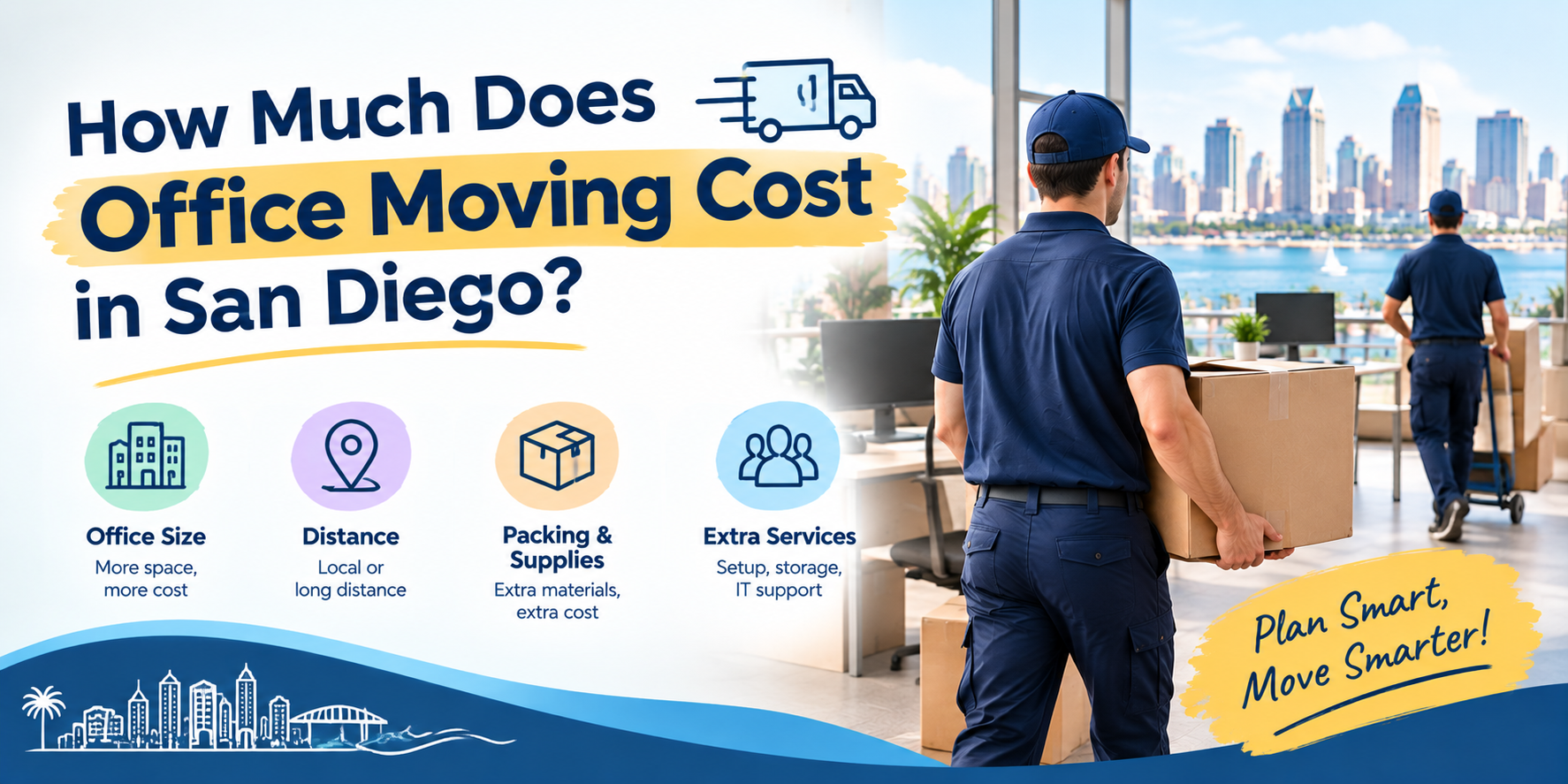
The cost of a long-distance move from San Diego depends on several variables. These may include the distance to your destination, the amount and weight of your belongings, the transportation method, packing services, and the time of year.
Some companies price interstate household moves primarily according to shipment weight and distance, while other pricing details depend on the specific service and agreement. Additional requirements, such as storage or specialized handling, can also affect the total.
When reviewing quotes, check whether the price includes loading, transportation, unloading, packing materials, and any requested furniture disassembly. Confirm whether additional services or changes to the shipment could result in extra charges.
Be cautious of a quote that is substantially lower than comparable estimates without a clear explanation. An unusually low initial price may not reflect the actual scope of work.
The goal is to find a moving company that provides a reasonable, clearly explained estimate for the services you need.
5. Look for Experience With Your Destination
Not every long-distance move follows the same route or requires the same arrangements. Moving from San Diego to a nearby state may involve different scheduling considerations from a relocation to the Midwest or East Coast.
Ask whether the moving company regularly handles moves similar to yours. Find out how it plans transportation, communicates delivery windows, and manages changes caused by weather, road conditions, or scheduling issues.
It is also helpful to discuss any destination-specific requirements. For example, an apartment building may require elevator reservations, while a property on a narrow residential street may need special arrangements for truck access.
A moving company should be able to explain the general process and identify information it needs before confirming your move.
Clear answers can help you understand whether the company’s approach matches your destination and expectations.
6. Ask Whether Your Belongings Will Travel on a Dedicated or Shared Truck
Long-distance movers may use different transportation arrangements depending on the company, route, shipment size, and service selected.
With a dedicated truck, your belongings are transported separately from other customers’ shipments. Shared or consolidated transportation may combine shipments, which can sometimes offer a lower-cost option but may involve different scheduling arrangements.
Neither option is automatically right for every move. The best choice depends on your budget, shipment size, delivery requirements, and the company’s available services.
Before booking, ask how your belongings will be transported, whether they may be transferred between vehicles, and how the arrangement affects pickup and delivery timing.
If you choose a shared transportation option, ask how the company manages inventory and keeps different customers’ belongings separated.
Understanding the transportation method helps you compare providers on more than price alone.
7. Review Packing and Furniture Protection Services
Long-distance transportation can expose furniture, electronics, and fragile items to extended handling and movement. Proper packing and protection are therefore important parts of the planning process.
Ask whether the company offers full packing, partial packing, fragile-item packing, or transportation-only services. Confirm which packing materials are included and whether special crating is available for artwork, mirrors, antiques, or other delicate belongings.
Furniture should be assessed before moving day, especially if it contains glass components, detachable parts, or delicate finishes.
You can also prepare your own belongings by removing items you no longer need, organizing boxes, and clearly labeling fragile contents. However, follow the moving company’s instructions about packing and preparing items for transportation.
For valuable belongings, ask what documentation is recommended and how their condition should be recorded before loading.
These steps can help reduce confusion and support a more organized move.
8. Understand Pickup and Delivery Windows
One of the biggest differences between local and long-distance moves is the delivery schedule. A local relocation may be completed within a single day, while a longer journey can require additional transportation time and coordination.
Ask your mover for the planned pickup date and estimated delivery window. Find out whether delivery is guaranteed or estimated and what happens if delays occur.
Avoid making nonrefundable travel or accommodation arrangements based on an unconfirmed delivery date. If you need your belongings by a specific deadline, discuss this before booking and ask whether the company offers a suitable service option.
Keep essential items with you during transit, including important documents, medications, chargers, valuables, and a few days of clothing.
A clear understanding of the delivery process helps you prepare for the transition and reduces the inconvenience of waiting for essential belongings.
9. Check Reviews and Customer Feedback
Customer reviews can provide useful information about how a moving company manages communication, scheduling, handling, and customer concerns.
Rather than relying only on an overall rating, look for recurring patterns in feedback. Pay attention to comments about estimate accuracy, delivery updates, damaged items, unexpected charges, and how the company responds when something goes wrong.
Reviews describing long-distance moves may be more relevant than feedback about short local relocations.
You can also ask the company whether references from previous customers are available.
Keep in mind that reviews represent individual experiences and should be considered alongside other evidence, including licensing, written estimates, service terms, and direct communication.
A company that answers questions clearly and explains its procedures can make it easier to understand what to expect before moving day.
10. Understand Insurance and Valuation Coverage
Before hiring a long-distance moving company, ask how your belongings are protected during transportation.
For interstate household moves, movers generally must offer applicable liability or valuation options under federal rules. The available options have different levels of protection, costs, conditions, and limitations.
Ask the company to explain the difference between basic released-value protection and full-value protection where applicable. Review the written terms carefully instead of assuming that every damaged or missing item will automatically be reimbursed at its full replacement cost.
Create an inventory of valuable belongings and photograph items when appropriate. Keep receipts or other records for high-value possessions if available.
If you have antiques, artwork, collectibles, or unusually expensive equipment, discuss those items with the mover before the estimate is finalized.
Understanding the available protection helps you make an informed decision about your belongings and the financial risks associated with the move.
11. Watch for Long-Distance Moving Scams
Long-distance relocations often involve larger payments and transportation arrangements, so it is important to recognize warning signs before signing a contract.
Be cautious if a company refuses to provide its registration details, avoids giving you a written estimate, or cannot clearly explain its pricing and delivery procedures.
Other warning signs may include pressure to make an immediate payment, vague contract terms, unexplained price changes, or a quote that seems unusually low compared with other estimates.
Before paying a deposit, confirm the company’s identity, read the agreement, and understand the cancellation and payment policies. Avoid relying exclusively on text messages or verbal promises when important terms should be documented.
You should also confirm whether you are dealing directly with the carrier or with a moving broker that arranges transportation through another company. Ask which business will actually transport your belongings and who will be responsible for communication.
For additional guidance, consult the FMCSA’s official moving resources.
12. Ask About Storage Options
Sometimes your move-out and move-in dates do not line up. You might need to leave your current property before your new home is ready, or your destination may require repairs before furniture can be delivered.
In these situations, storage can help bridge the gap. Ask whether the moving company offers storage or works with a storage provider and whether your belongings will be stored at the same facility or transferred between locations.
Confirm the storage fees, minimum duration, access arrangements, handling charges, and protection terms. Also ask how storage affects the final delivery schedule.
If you expect a delay at your destination, mention it when requesting the original estimate. Adding storage after the move has been arranged may change the cost and logistics.
Planning for this possibility in advance can make your relocation more flexible.
13. Book Your Movers Early
Long-distance moving requires coordination between pickup, transportation, and delivery. Booking early gives you more time to compare providers and secure a suitable moving date.
If possible, begin planning several weeks before your intended move, especially if you are relocating during a busy season, moving a large household, or traveling across the country.
Early planning also gives you time to review estimates, organize your inventory, arrange packing, notify utility providers, and confirm access at both properties.
Before finalizing the booking, make sure the moving date, pickup arrangements, delivery window, and requested services are documented.
If your dates are flexible, ask whether different pickup dates could affect availability or pricing. Do not assume that changing dates will automatically reduce the cost, but comparing available options may help you find a suitable arrangement.
14. Prepare a Checklist for Moving Day
Once you have selected your long-distance movers in San Diego, preparing a checklist can help you stay organized.
Before the Move
Confirm the moving date, review the contract, finalize the inventory, and make sure the moving company has accurate addresses and contact information.
Arrange any required building access, parking permissions, elevator reservations, or loading instructions. Complete packing according to the agreed service plan.
On Pickup Day
Review the inventory and keep copies of important moving documents. Photograph valuable items when appropriate and confirm how the company will provide updates during transportation.
Keep essential personal belongings separate from the shipment so you can access them during the journey.
Before Delivery
Confirm the destination address and review the expected delivery window. Make sure someone can provide access to the property and identify where large furniture should be placed.
At delivery, check your belongings against the inventory and document any visible damage or missing items according to the mover’s claims procedure.
A clear checklist can help you manage the details of your relocation without relying on memory alone.
Why Consider US Eagle Moving for Your Long-Distance Move?
Choosing a moving company starts with understanding your route, the amount of belongings you need to transport, and the services required at both ends of the journey.
US Eagle Moving serves customers looking for moving assistance in San Diego. If you are planning a long-distance relocation, contact the company to discuss your destination, moving dates, packing requirements, and transportation needs. Confirm the routes and services available for your specific move before booking.
When requesting an estimate, provide an accurate inventory and explain any special handling or delivery requirements. Ask for the applicable written estimate, service details, and expected delivery arrangements so you can make an informed decision.
To discuss your moving plans, visit US Eagle Moving.
Conclusion
Choosing the right long distance movers in San Diego, CA, requires more than comparing prices. You should verify the company’s credentials, request a detailed written estimate, understand the transportation method, review protection options, and confirm pickup and delivery arrangements.
Planning early and providing accurate information about your belongings can help you compare moving companies fairly and reduce avoidable problems during the relocation.
If you are preparing to move from San Diego to another city or state, contact US Eagle Moving to discuss your requirements and confirm which services are available for your route. Call (858) 752-5051 to get started.
Frequently Asked Questions
How do I choose the best long-distance movers in San Diego?
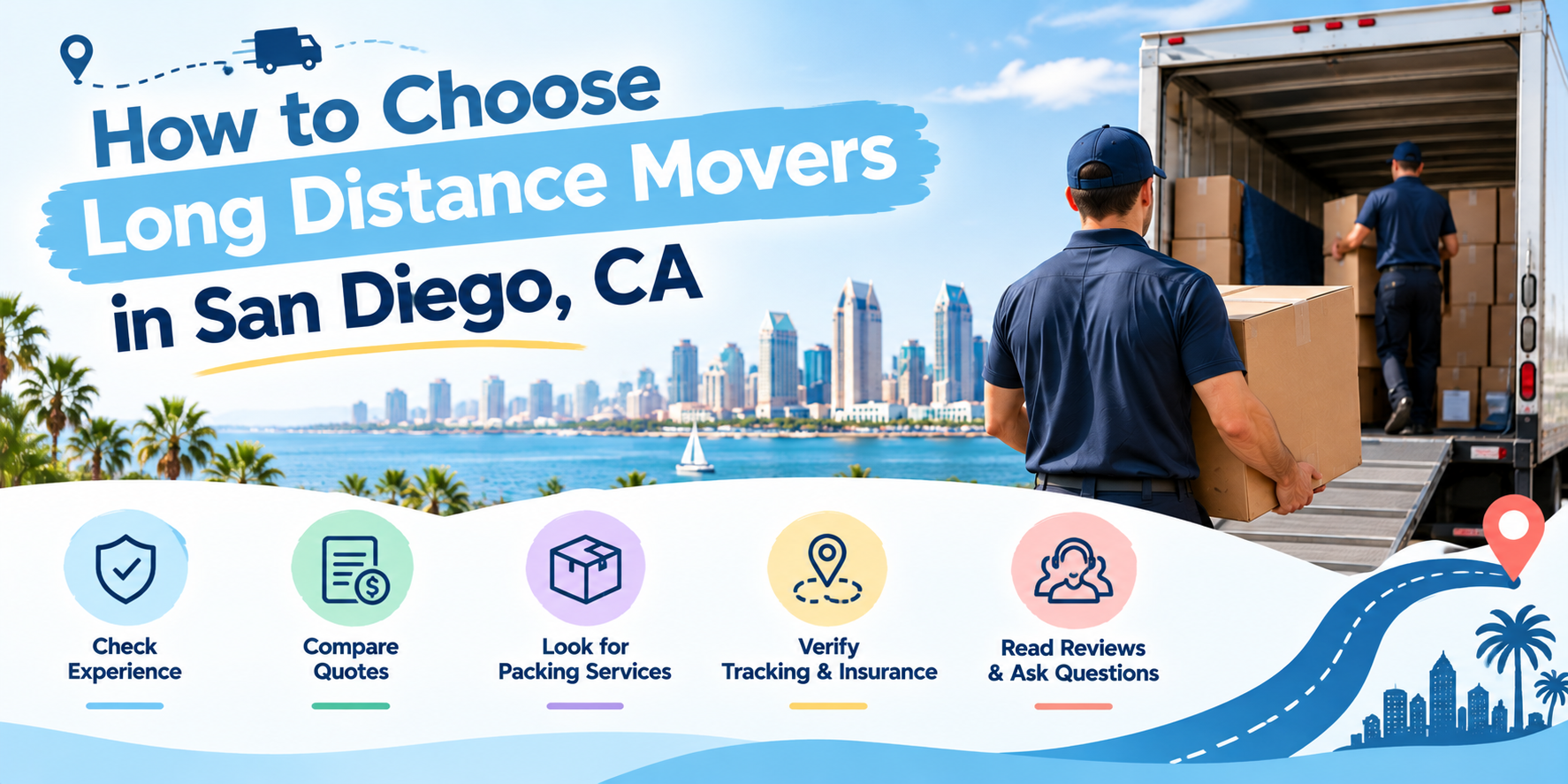
Compare licensing and registration, written estimates, experience with your destination, packing services, transportation arrangements, delivery windows, and customer feedback. Verify interstate authorization through the FMCSA if your move crosses state lines.
How far in advance should I book long-distance movers?
Start planning several weeks ahead whenever possible. Larger moves, summer relocations, and cross-country journeys may require additional preparation. Booking early gives you more time to compare estimates and coordinate your moving schedule.
What affects the cost of a long-distance move?
The main factors include shipment size or weight, distance, packing services, transportation arrangements, specialty items, storage, and access conditions at both properties. The final price depends on the specific services and terms of your moving agreement.
Are long-distance movers required to have a USDOT number?
Movers transporting household goods across state lines generally need the applicable federal registration and USDOT number. Verify the carrier’s identity and operating authority through the FMCSA before signing a contract.
What is the difference between a binding and non-binding moving estimate?
A binding estimate generally sets the price for the services and inventory described in the agreement, subject to applicable rules and contract terms. A non-binding estimate is not a guaranteed final price and may change under the relevant rules. Ask the mover to explain the estimate type and conditions in writing.
Should I choose a dedicated truck for a long-distance move?
A dedicated truck keeps your shipment separate from other customers’ belongings during transportation, while shared or consolidated arrangements may combine shipments. Compare the cost, handling process, and delivery schedule before deciding which option fits your needs.
How can I protect my belongings during a long-distance move?
Use appropriate packing materials, identify fragile items, document valuable belongings, review valuation coverage, and maintain an inventory. Ask your moving company how it handles special items and what procedures apply if damage or loss occurs.
Can long-distance movers store my belongings temporarily?
Some moving companies offer storage or coordinate with storage providers. Confirm availability, fees, access terms, handling arrangements, and how storage may affect the delivery schedule before booking.