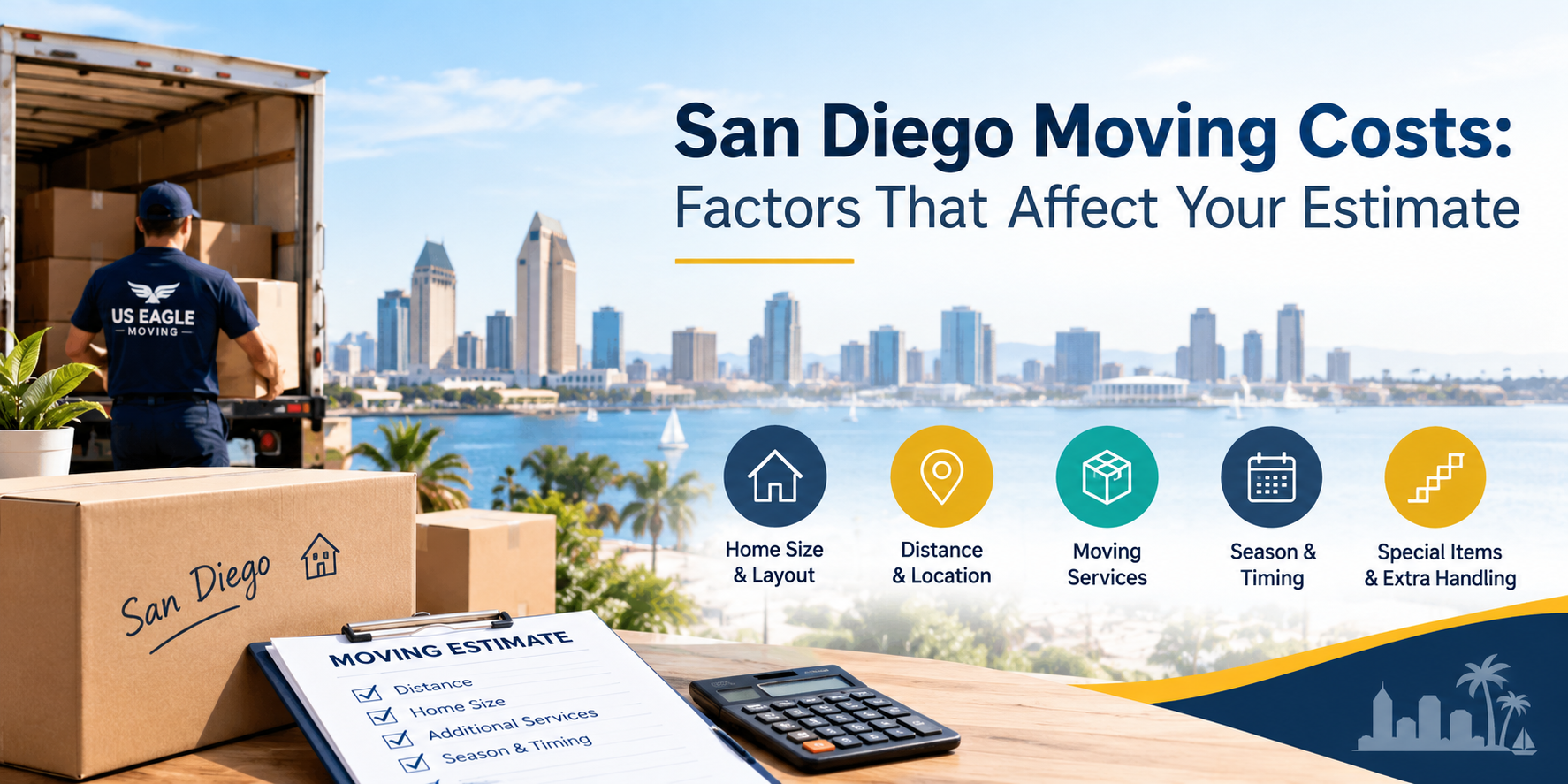
Planning a move can be exciting, but figuring out the budget is often one of the most challenging parts of the process. Whether you are moving from a small apartment, relocating your family to a larger house, or transferring your business to a new location, understanding moving expenses can help you prepare with greater confidence.
If you are searching for movers in San Diego, the cost of your relocation will depend on several factors, including the size of your property, the amount of furniture you need to transport, the distance between locations, and the services you choose. Some moves require only loading, transportation, and unloading, while others involve professional packing, furniture preparation, or temporary storage.
San Diego also has a variety of property types and access conditions. Moving from an apartment with limited parking may require different planning than relocating from a house with a driveway. These practical details can influence the time, labor, and resources needed to complete your move.
In this guide, we explain the main factors that affect moving costs in San Diego, how to prepare a realistic budget, and what to consider when comparing moving estimates. With the right information, you can make a more informed decision and find moving services that suit your requirements.
What Is the Average Cost of Hiring Movers in San Diego?
There is no single price that applies to every move in San Diego. The cost depends on the amount of work involved, the services included, the distance traveled, and the company’s pricing structure.
For example, moving a studio apartment with a limited number of belongings is generally a different job from relocating a three-bedroom home filled with furniture, appliances, and packed boxes. A move involving stairs, long carrying distances, or special handling requirements may also require additional time and labor.
Some moving companies calculate local moving charges using hourly rates, while others provide estimates based on the inventory, scope of work, or a combination of factors. Long-distance relocations may use different pricing methods based on shipment size, distance, and other applicable conditions.
Instead of relying on a general online price, request a written estimate based on your actual moving requirements. This gives you a more useful starting point for budgeting and makes it easier to compare services from different providers.
When requesting a quote, provide accurate details about both properties, the number of rooms, large furniture items, packing requirements, and your preferred moving date. The more complete your information is, the easier it becomes for the company to assess your move.
1. How the Size of Your Home Affects Moving Costs
The size of your home is one of the most important factors that can influence moving expenses. Larger properties often contain more furniture, household items, and boxes, which can increase the amount of labor and transportation capacity required.
However, the number of bedrooms alone does not determine the final cost. Two homes with the same number of bedrooms can contain very different amounts of belongings.
Studio and One-Bedroom Apartments
Smaller apartments may require fewer movers, less packing material, and less loading time than larger homes. However, access conditions can still affect the overall job.
For example, an apartment on an upper floor may require elevator reservations or additional coordination. Limited parking near the entrance can also increase the distance that belongings must be carried.
Preparing boxes in advance, organizing belongings, and confirming building access can help make a smaller move more efficient.
Two-Bedroom Apartments and Homes
A two-bedroom property may contain beds, wardrobes, sofas, dining furniture, appliances, and numerous household boxes. The amount of furniture and the level of preparation required can influence the time needed for loading and unloading.
If you have large furniture pieces or fragile items, discuss them with the moving company when requesting an estimate. This helps the provider understand your inventory and determine whether additional preparation is needed.
Larger Family Homes
Moving a larger home generally involves more coordination because there may be several bedrooms, storage areas, outdoor furniture, and heavy household items.
A detailed inventory can help the moving company understand the scope of the job. You should also identify belongings that will not be transported, such as items you plan to donate, sell, or discard.
Reducing unnecessary belongings before moving day can help simplify the relocation and may reduce the amount of space and labor required.
2. Distance Between Your Current and New Property
The distance between your pickup and delivery locations is another factor that affects moving expenses.
A local move within San Diego may involve a relatively short transportation distance, but the total job can still require considerable time depending on traffic, parking, property access, and the amount of furniture being moved.
A longer relocation generally requires additional transportation planning. Interstate moves can involve different pricing structures, delivery arrangements, and regulatory requirements compared with local household moves.
When requesting an estimate, provide the complete pickup and delivery addresses or accurate location details. Explain whether the moving vehicle can access both properties and whether there are restrictions on loading or unloading.
You should also ask whether the quoted price includes transportation, labor, travel time, and any applicable additional charges. Understanding these details helps prevent confusion when comparing estimates.
If you are moving to another state, confirm the expected delivery window and how the company will communicate changes to the schedule. Long-distance moves require more advance planning, particularly when your housing arrangements depend on a specific arrival date.
3. Labor and Hourly Rates for Local Movers
Many local moving jobs are priced partly according to the amount of labor required. Depending on the company, the estimate may reflect the number of movers, the expected duration of the job, transportation, and other included services.
A small move with straightforward access may require less labor than a larger relocation involving multiple floors, heavy furniture, or long distances between the property and the moving vehicle.
The number of movers assigned to a job can also influence how the work is organized. A larger crew may complete certain tasks more efficiently, but the appropriate team size depends on the inventory, property layout, and schedule.
When comparing hourly estimates, ask the following questions:
- How many movers will be assigned to the job?
- What is the hourly rate, if applicable?
- When does billable time begin and end?
- Is travel time charged separately?
- Is there a minimum number of billable hours?
- Are transportation or equipment charges included?
- How are additional hours calculated?
Do not compare hourly rates without considering the complete pricing structure. A lower hourly rate may not represent the lower total cost if additional fees or a longer estimated duration apply.
Ask each company to explain how the final bill will be calculated and what circumstances could change the original estimate.
4. Packing Services and Moving Supplies
Packing is another factor to consider when preparing your moving budget. Some people prefer to pack their belongings themselves, while others choose professional packing assistance to save time or handle delicate possessions.
Packing your own belongings can reduce the amount of paid packing labor, but you will need to purchase or obtain suitable supplies and allow enough time to complete the work.
Professional packing services may include packing labor, boxes, wrapping materials, and preparation of selected household items. The exact services vary between companies, so confirm what is included before booking.
Full Packing Services
Full packing assistance may be useful for larger homes, busy households, or relocations with a tight schedule. Depending on the agreement, the crew may pack most household belongings before loading them for transportation.
If you choose this option, clarify whether specialty items, fragile belongings, artwork, or unusually valuable possessions require separate arrangements.
Partial Packing Services
Partial packing allows you to pack everyday items yourself and request assistance with selected belongings.
For example, you might pack clothing, books, and non-fragile kitchen items while arranging professional help for delicate glassware or difficult-to-handle possessions.
This approach can provide a balance between personal preparation and paid assistance.
Packing Materials
Boxes, tape, protective wrapping, and cushioning materials should also be included in your budget. The quantity and type of supplies required depend on the number of belongings and the care needed to protect them.
Ask whether packing supplies are included in your moving estimate or charged separately. This makes it easier to understand the full cost before moving day.
5. Stairs, Elevators, Parking, and Property Access
Property access can have a meaningful effect on the time and labor required for a move. These details are particularly important in apartment buildings, condominium communities, and busy residential areas.
An apartment with a reserved loading area and a convenient elevator may be easier to access than a property with multiple flights of stairs and limited parking.
Similarly, a house with a long walkway between the entrance and the moving vehicle may require more carrying time than a property with straightforward driveway access.
Before requesting a quote, explain any conditions that may affect the move, including:
- Multiple flights of stairs.
- Elevator reservations or restricted operating hours.
- Narrow hallways or doorways.
- Limited street parking.
- Long distances between the property and the truck.
- Building rules governing moving hours.
- Restrictions on vehicle size or loading locations.
You should also contact your property manager if your building requires advance approval for a move. Reserving an elevator or loading space ahead of time can help avoid unnecessary delays.
Providing accurate access information allows the moving company to evaluate your circumstances more effectively and identify potential additional costs before the moving date.
6. Special Handling for Heavy or Fragile Belongings
Certain belongings require more preparation than ordinary boxes and household furniture. Examples include large appliances, oversized furniture, delicate mirrors, artwork, and other items that need special handling.
The cost of moving these possessions depends on the item’s size, weight, fragility, access conditions, and the equipment or labor required.
For instance, moving a large piece of furniture through a narrow staircase may require additional planning. Fragile belongings may need protective wrapping, suitable packing materials, or other precautions.
Before booking, identify any items that may require special attention. Provide details about their approximate dimensions, location within the property, and any relevant access limitations.
Ask whether the company can accommodate those items and whether additional charges apply. You should also confirm whether certain belongings require separate transportation arrangements or advance preparation.
Do not assume that every moving company handles every specialty item. Discussing these requirements early helps you choose a provider whose services match your needs.
7. Storage Services and Temporary Housing Arrangements
Sometimes, the date you leave your current property does not match the date you can move into your new home. In these situations, temporary storage may become part of your moving budget.
Storage can also be useful when downsizing, renovating a property, relocating for work, or moving into a home that is not yet ready for all your belongings.
The total cost depends on the storage arrangement, the amount of space required, the length of time your possessions remain in storage, and any handling or transportation services involved.
If you think you may need storage, ask whether the moving company offers it or works with a separate storage provider. Confirm how charges are calculated and whether transportation to and from the storage location is included.
You should also ask about access arrangements, security measures, payment terms, and any restrictions on the items that can be stored.
Planning for possible storage needs in advance can help you avoid making rushed arrangements when your moving dates change.
8. Moving Date and Seasonal Demand
The timing of your move can influence availability and pricing. Demand may increase around weekends, the beginning or end of the month, and common lease-transition periods.
If many customers are moving during the same period, your preferred company may have limited availability. Booking early gives you more time to compare estimates and coordinate the details of your relocation.
If your schedule is flexible, ask whether alternative dates are available and whether they affect the estimate. Do not assume that a weekday or a particular season will automatically be cheaper. Pricing depends on the provider’s schedule and the details of your move.
Last-minute relocations can require additional coordination because there is less time to arrange packing, parking, and other preparations. Some companies may accommodate urgent requests, but availability is not guaranteed.
Once you select a moving date, confirm the appointment in writing and keep the company’s contact information accessible. Notify the provider promptly if your schedule or inventory changes.
9. How to Compare Moving Quotes in San Diego
Obtaining multiple estimates can help you understand the range of services and prices available for your relocation. However, the estimates should be based on comparable information.
If one company quotes for transportation and loading only while another includes packing and additional labor, their prices cannot be compared fairly without accounting for the difference.
Start by providing each company with the same inventory details, addresses, access information, moving date, and service requirements.
Review the written estimate and identify the services included in the total. Ask about additional labor, packing materials, travel charges, storage, and any other fees that may apply.
What to Check Before Accepting a Quote
Make sure you understand:
- The estimated total price and pricing method.
- The services included in the agreement.
- The conditions that could increase the cost.
- The pickup and delivery arrangements.
- The payment schedule and accepted payment methods.
- The cancellation and rescheduling policies.
- The applicable protection options and claims process.
If something is unclear, ask for clarification before signing. Written explanations are especially useful when the estimate includes conditions that may change the final charge.
A suitable moving company should be able to explain its estimate in a way that helps you understand the service being offered.
10. How to Reduce Your Moving Costs Without Compromising Your Move
Managing moving expenses starts with preparation. A few practical decisions can help you control your budget without overlooking important moving requirements.
Declutter Before Packing
Go through your belongings before packing and identify items you no longer need. Donating, selling, recycling, or responsibly disposing of unused possessions can reduce the volume of items that must be transported.
Fewer belongings may mean fewer boxes and less time spent packing and loading.
Pack in Advance
If you are handling some or all of the packing yourself, start early. Leaving everything until the last minute can make it difficult to organize boxes, obtain supplies, and prepare furniture properly.
Pack non-essential items first and keep everyday necessities accessible until moving day approaches.
Prepare an Accurate Inventory
Make a list of major furniture items, appliances, and other belongings that need special handling. Share this information when requesting estimates.
Accurate details help companies assess the scope of your move and reduce the chance of unexpected changes caused by an incomplete inventory.
Compare the Complete Cost
Look beyond the advertised hourly rate or initial estimate. Consider labor, transportation, packing, supplies, access conditions, and other charges that may apply.
Choose the option that provides an appropriate combination of services, clear terms, and value for your circumstances.
Confirm Access and Building Requirements
Arrange parking, elevator reservations, and loading permissions before moving day. Inform your movers about any restrictions that could affect the schedule.
Preparation helps reduce avoidable complications and gives the moving team a clearer understanding of the job.
Avoid Unnecessary Last-Minute Changes
Finalize your moving plans as early as practical. Changes to the inventory, destination, service requirements, or schedule can affect the original estimate.
If a change becomes necessary, notify the company promptly and request confirmation of any revised charges.
11. How to Choose Reliable Movers in San Diego
Price is only one consideration when selecting a moving company. You should also evaluate the provider’s credentials, communication, service descriptions, and written terms.
Start by checking customer reviews across independent platforms. Look for recurring feedback about scheduling, communication, careful handling, and the clarity of estimates.
Verify the licensing and registration requirements that apply to your type of move. For interstate household-goods relocations, you can use the Federal Motor Carrier Safety Administration website at https://www.fmcsa.dot.gov/ to review relevant carrier information.
Ask the company to explain its pricing structure and the services included in the estimate. Be cautious of providers that refuse to provide clear written terms, pressure you into making an immediate decision, or cannot explain additional charges.
You should also confirm who will perform the move, how to contact the company on moving day, and what steps apply if your belongings are damaged or lost.
A well-informed decision combines competitive pricing with clear communication, suitable services, and verified business details.
12. Is Hiring Professional Movers Worth the Cost?
Whether professional movers are worth the expense depends on the size of your move, your available time, and how much assistance you need.
A small move with few belongings may be manageable without hiring a full moving crew. However, a larger household relocation can involve substantial packing, lifting, loading, transportation, and unloading.
When comparing a DIY move with professional services, consider the complete cost of renting a vehicle, purchasing packing materials, arranging help, and managing the work yourself. You should also account for the time and physical effort required.
Professional movers may be especially useful when you have heavy furniture, limited availability, multiple rooms to pack, or property access challenges. Additional services such as packing or storage may also simplify the process when they fit your needs.
The best option is the one that balances your budget, schedule, and moving requirements. Request detailed estimates and compare them with the realistic cost of handling the relocation yourself.
13. Moving Budget Checklist for San Diego Residents
Before finalizing your budget, prepare a list of expected moving expenses. The exact categories will depend on your circumstances, but a checklist can help you identify costs that might otherwise be overlooked.
Consider budgeting for:
- Moving labor and transportation.
- Packing services, if required.
- Boxes, tape, wrapping, and protective materials.
- Special handling for heavy or fragile belongings.
- Storage, if needed.
- Parking permits or building-related arrangements, where applicable.
- Cleaning and preparation of the old property.
- Utility connections and other expenses at the new address.
- Temporary accommodation or meals, if required during the move.
Keep a record of estimates, agreements, receipts, and payments. This will help you compare the original budget with your actual expenses.
It is also sensible to allow a reasonable financial buffer for unexpected needs. The amount will depend on the complexity of your move and your personal circumstances.
A clear budget gives you a better understanding of what you can afford and helps you prioritize the services that matter most.
Conclusion
Understanding moving costs in San Diego can help you prepare a realistic budget and choose services that match your needs. The size of your home, transportation distance, labor requirements, packing assistance, property access, and moving date can all influence the total price.
Before hiring movers, request written estimates, compare the complete cost, verify the applicable credentials, and ask questions about any unclear terms. Preparing your belongings in advance and confirming property access can also help make moving day more organized.
US Eagle Moving is an option to consider when exploring moving services in San Diego. Visit US Eagle Moving to review the company’s available services and discuss the details of your relocation.
For more information about your upcoming move, contact US Eagle Moving at 858-752-5051. Discuss your inventory, schedule, and service requirements with the company to determine which moving options may be appropriate for your needs.
Frequently Asked Questions
How much do movers cost in San Diego for a small apartment?
The cost depends on the amount of furniture and belongings, the distance between properties, access conditions, labor requirements, and the services included. A small apartment move may require fewer resources than a larger household relocation, but an accurate estimate should be based on your actual inventory and circumstances.
Do San Diego movers charge by the hour?
Some companies use hourly pricing for local moves, while others use different methods depending on the scope of work. Ask how the price is calculated, what the hourly rate includes, whether minimum charges apply, and how travel time or additional labor is handled.
What makes moving costs increase?
Common factors include a larger inventory, longer transportation distances, packing assistance, heavy or fragile belongings, stairs, difficult parking, and changes to the original moving plan. Additional services and applicable fees may also affect the final price.
Is packing included in a moving estimate?
Not always. Some estimates cover transportation and moving labor only, while others include packing assistance or supplies. Review the written estimate and confirm whether packing materials, labor, and specialty-item preparation are included.
How can I get an accurate moving quote?
Provide your pickup and delivery details, inventory, property access information, preferred moving date, and requested services. Ask for a written estimate and clarify which circumstances could affect the final price.
Should I book movers in advance?
Booking early is helpful when you need a specific date or have a large or complex move. Availability varies, so contact companies as soon as you know your moving timeline and confirm the appointment in writing.
Are the cheapest movers always the best option?
Not necessarily. Compare the complete estimate, included services, relevant credentials, customer feedback, and written terms. A slightly higher quote may offer a more suitable service, while an unusually low quote should be reviewed carefully to understand what is included.
Can I reduce moving costs by packing myself?
Packing your own belongings may reduce paid packing labor, but you will need to allow time and budget for suitable supplies. You can also consider partial packing assistance if you want professional help with selected fragile or difficult-to-pack items.