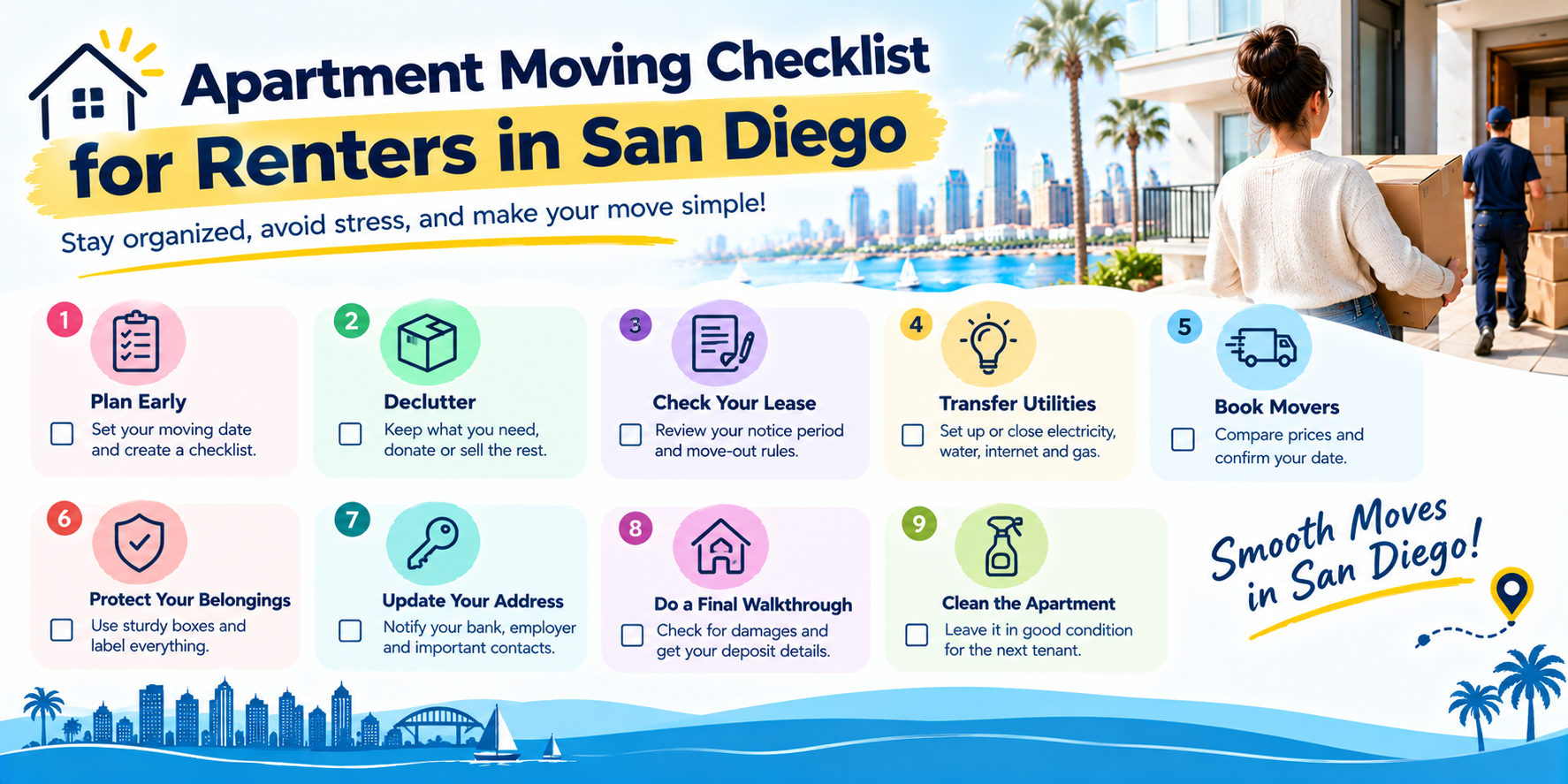
Moving into a new apartment in San Diego can be exciting, but renters have more to manage than simply packing boxes and transporting furniture. You may need to coordinate with your property manager, follow building rules, arrange parking, transfer utilities, and leave your current apartment in good condition. Missing even one of these steps can create unnecessary delays on moving day.
A practical apartment moving checklist for renters in San Diego helps you organize each task before the move. Whether you’re moving from a studio in Mission Valley, an apartment in Mira Mesa, a condo in La Jolla, or a rental near University City, planning ahead can make the transition easier.
This guide covers what to do before moving, how to prepare your apartment, what to check with your landlord, and how to keep moving day organized.
1. Confirm Your Moving Dates and Rental Requirements
Before packing anything, confirm the important dates associated with your move. Your lease may specify when you must vacate your current apartment, while your new rental agreement may have a separate move-in date or key collection procedure.
Start by checking the following details:
- Your lease end date and required notice period.
- Your approved move-out date and time.
- Your new apartment’s move-in date.
- The time you can collect your keys, fob, or access card.
- Any cleaning, inspection, or key-return requirements.
- Whether your building charges a moving deposit or reservation fee.
If there is a gap between your move-out and move-in dates, arrange temporary accommodation or storage before the last minute. Confirm all dates in writing with the relevant property managers so you have a clear record of the arrangements.
Check Your Lease Before Giving Notice
Renters should review their lease before notifying a landlord that they intend to leave. Pay attention to the notice period, early termination conditions, cleaning expectations, and instructions for returning keys.
Do not assume that moving out on the last day of the month automatically satisfies every lease requirement. If you are unsure about a clause, ask your property manager for clarification before making arrangements.
2. Book Apartment Movers in San Diego Early
Once your moving date is reasonably certain, start comparing moving companies. Apartment moves can involve stairs, elevators, restricted loading zones, narrow hallways, and limited parking. Choosing movers who understand these practical challenges can help you prepare for the specific layout of your building.
When comparing apartment movers in San Diego, consider the services offered, written estimates, insurance information, scheduling flexibility, and customer feedback from reliable sources.
Ask each company:
- What services are included in the estimate?
- Is packing or furniture disassembly available?
- Are stairs, long carrying distances, or elevator delays addressed in the estimate?
- What is the arrival window?
- Are there additional charges for bulky or specialty items?
- What insurance or valuation options are available?
- Can the company provide any documents required by your building?
Provide accurate details about both apartments, including floor numbers, elevator access, parking restrictions, and large furniture. This gives the moving company a better understanding of the job.
If you’re planning a move at the beginning or end of the month, on a weekend, or during a busy summer period, check availability early. Your preferred time slot may not remain available until the week of the move.
3. Confirm Apartment Building Rules and Elevator Reservations
One of the most important steps in an apartment move is checking the rules at both buildings. Some apartment communities allow residents to move whenever they wish, while others require advance approval and specific moving hours.
Contact your current and new property managers and ask about:
- Approved moving days and hours.
- Service elevator or freight elevator reservations.
- Loading dock availability.
- Designated truck parking or loading areas.
- Building access codes, gates, and entry procedures.
- Protective padding for elevators and common areas.
- Required mover insurance certificates.
- Moving deposits and inspection procedures.
Some managed buildings and condominium associations require a certificate of insurance, often called a COI, from the moving company. Requirements vary, so obtain the building’s exact instructions and send them to your movers well before moving day.
Do not assume that a reservation is confirmed simply because you submitted a form. Get written confirmation of the time window and any access instructions.
4. Create a Room-by-Room Packing Plan
Packing becomes easier when you work through one area at a time instead of filling boxes randomly. Start with items you rarely use, then move toward everyday belongings as moving day approaches.
A room-by-room system also makes unpacking easier because boxes can be placed in the correct rooms at your new apartment.
Living Room
Pack decorative items, books, electronics, and accessories first. Keep television cables, remotes, and small electronic accessories together in clearly labeled bags. Protect fragile decorations and use suitable padding for screens and glass surfaces.
If you have a large sofa, sectional, or entertainment unit, measure it before moving day. Confirm that it can pass through the apartment entrance, hallway, stairwell, and elevator.
Kitchen
Use small, sturdy boxes for heavy kitchen items such as dishes and cookware. Wrap breakable items individually and mark boxes containing fragile belongings.
Use up perishable food before the move, and avoid packing open containers that could leak. If you are transporting a refrigerator or freezer, follow the manufacturer’s preparation instructions and allow sufficient time for cleaning and defrosting when necessary.
Bedroom
Pack clothing, shoes, bedding, and accessories in organized groups. Keep essential clothing separate so you do not have to open several boxes to find what you need on the first night.
Mattresses and upholstered furniture should be protected during transportation. If your bed frame needs disassembly, place its hardware in a labeled bag and attach it securely to the appropriate furniture component.
Bathroom
Keep toiletries, towels, cleaning supplies, and personal care items organized. Seal liquids in leak-resistant bags and transport medications separately from general bathroom supplies.
Avoid packing items you will need immediately, including toilet paper, soap, basic hygiene products, and prescribed medications.
Home Office
Pack documents, monitors, computer accessories, and office equipment carefully. Back up important digital files before moving computers and external drives.
Keep passports, financial documents, lease agreements, and other important paperwork with you rather than placing them in a general moving box.
5. Declutter Before Packing
Moving provides a useful opportunity to decide what you actually want to take to your next apartment. Transporting unused furniture, old clothing, and unwanted household items takes additional time and space.
Sort your belongings into four categories: keep, donate, sell, and discard. Make these decisions before booking the final moving arrangements whenever possible, especially if you are moving from a larger apartment into a smaller one.
Consider donating usable items, selling furniture you no longer need, and arranging appropriate disposal for items that cannot be reused. Do not leave unwanted belongings in hallways, shared spaces, or beside apartment dumpsters unless your building specifically permits it.
Decluttering also helps you estimate the amount of packing material and moving assistance you need.
6. Measure Furniture and Check Apartment Access
A piece of furniture that fits comfortably in one apartment may not fit through the entrance or elevator at another. Measure larger items before moving day, particularly sectionals, wardrobes, dining tables, bed frames, and desks.
Check the dimensions of:
- Apartment entrance doors.
- Interior hallways and tight corners.
- Stairwells and landings.
- Elevators and elevator doors.
- Building entrances and loading routes.
- Doorways and available space in the new apartment.
If a large item needs to be disassembled, decide in advance who will handle the work. Confirm whether your movers offer furniture disassembly and reassembly, and whether that service is included in the estimate.
Share unusual access challenges with your moving company ahead of time. This is especially helpful for older buildings, upper-floor apartments, and properties with narrow staircases or limited loading areas.
7. Arrange Parking and Loading Access
Parking can be a significant part of apartment moving logistics in San Diego. A moving truck needs a suitable place to load and unload without blocking traffic, restricted access points, or neighboring properties.
Ask your property manager where the truck can park and whether a loading dock, visitor space, or designated loading zone must be reserved. In areas with metered parking, permit restrictions, or limited curb space, check the applicable local requirements before moving day.
Never assume that a parking space will be available just because it is close to the entrance. If a temporary parking permit or other authorization is needed, confirm the process with the relevant building management or local authority.
Share the parking instructions with your movers, including the correct entrance and any truck-height restrictions. A suitable loading location can reduce unnecessary carrying and help the crew follow the building’s rules.
8. Transfer Utilities, Internet, and Your Mailing Address
Make a list of the services connected to your current apartment and identify which ones need to be transferred, disconnected, or newly arranged.
Depending on your rental agreement, these may include electricity, gas, water, trash services, and internet. In San Diego, check your utility responsibilities and service arrangements with your landlord or property manager. SDG&E may be relevant for electricity and gas service, depending on your property and account arrangements.
Schedule changes around your move dates to avoid unnecessary interruptions. If you need internet access for work or study, arrange installation or transfer as early as the provider allows.
You should also update your address with relevant organizations, including:
- Your bank and credit card providers.
- Your employer or educational institution.
- Insurance providers.
- Subscription services and online retailers.
- Medical and dental offices.
- Government agencies and vehicle records, where applicable.
- Friends and family who need your new address.
If you use mail forwarding, submit your change-of-address request through the official postal service website. Keep a copy of any confirmation for your records.
9. Prepare Your Current Apartment for Move-Out
Renters should prepare their existing apartment according to the lease and any instructions provided by the property manager. Leaving the property clean, removing personal belongings, and documenting its condition can make the handover more straightforward.
Before moving day, confirm whether the landlord expects professional cleaning, specific repairs, or an inspection. Do not undertake alterations or repairs beyond your responsibility without understanding the agreement.
Complete these tasks before returning the keys:
- Remove personal belongings from every room.
- Check closets, cabinets, drawers, and storage spaces.
- Clean the areas required by your lease.
- Remove rubbish and unwanted items appropriately.
- Take dated photos or videos of the apartment’s condition.
- Record any existing damage or maintenance concerns.
- Return keys, access cards, and parking permits as instructed.
- Confirm the correct process for the security deposit and final inspection.
Keep copies of communications, inspection records, and any documents relating to the handover. If there is a disagreement about the property’s condition, having organized records can help clarify what was documented.
10. Pack a First-Night Essentials Bag
Your first night in a new apartment is easier when you can find essential items without unpacking every box. Pack a separate bag or small container that stays with you during the move.
Include items such as:
- Phone chargers and essential electronics.
- Toiletries and a towel.
- A change of clothes and sleepwear.
- Prescribed medications.
- Important documents and identification.
- Basic cleaning supplies.
- Toilet paper and hand soap.
- Drinking water and simple snacks.
- Bedding and any necessary sleep items.
- Scissors or a box cutter, stored safely.
- Basic tools for small assembly tasks.
Keep apartment keys, access instructions, your lease details, and the moving company’s contact information accessible. If your move involves children, pets, or specific care needs, pack their essentials separately as well.
11. One Week Before Moving Day
The final week is the time to confirm arrangements rather than leave major decisions until the last minute.
Use this checklist to review your progress:
-
Confirm the moving date and arrival window with your movers.
-
Verify elevator reservations and approved moving hours.
-
Confirm truck parking and loading instructions.
-
Provide any required insurance documentation to building management.
-
Finish packing all non-essential belongings.
-
Label boxes with their destination room.
-
Arrange utility and internet service dates.
-
Confirm key collection and building access.
-
Prepare your first-night essentials bag.
-
Arrange care for children or pets if needed.
-
Confirm the move-out inspection and key-return procedure.
-
Set aside valuables and important documents to transport personally.
If any arrangement is still pending, contact the relevant person or company immediately. A quick confirmation can prevent avoidable confusion when the moving crew arrives.
12. Apartment Moving Day Checklist
On moving day, keep your plan simple and make sure everyone knows what needs to happen. If possible, have an authorized person present at both properties or ensure the movers have the correct access arrangements.
Before the Movers Arrive
-
Make sure the building entrance and agreed loading area are accessible.
-
Keep keys, access cards, and parking instructions ready.
-
Separate items that should not be loaded onto the truck.
-
Identify fragile items and belongings requiring special handling.
-
Tell the moving crew about stairs, narrow hallways, or other access issues.
-
Keep pets and children away from active loading areas.
During Loading and Transportation
Stay available to answer questions and clarify where particular items should go. Review any inventory or service documents provided by the moving company, and keep your own records of important arrangements.
Do not place essential medications, identification, valuables, or critical documents in boxes that will be difficult to access during the move.
Before leaving the old apartment, check closets, kitchen cabinets, bathrooms, storage areas, and outdoor spaces. Take final photos if appropriate and follow the agreed key-return procedure.
After Arriving at Your New Apartment
-
Confirm that you can access the apartment.
-
Direct boxes to their labeled rooms.
-
Check furniture and belongings as they are unloaded.
-
Note any visible damage and follow the moving company’s reporting process.
-
Confirm that utilities and essential services are working as expected.
-
Keep copies of relevant moving documents and receipts.
-
Check that common areas are left in acceptable condition.
Take your time during the final walkthrough. It is easier to identify missing items or visible concerns while the move is still in progress.
13. After Moving In: Complete Your Renter Checklist
Once the boxes are inside, a few final tasks will help you settle in and establish a record of your new apartment’s condition.
Photograph the rooms, flooring, walls, appliances, windows, and any existing damage as soon as practical. Share condition concerns with the landlord or property manager according to the move-in procedure, and keep copies of the photos and communications.
Review the lease for any required move-in inspection forms or deadlines. Test basic fixtures and appliances, confirm that your keys and access devices work, and report maintenance issues through the appropriate channel.
Unpack the essentials first, followed by the kitchen, bedroom, and bathroom. You do not need to unpack everything in one day. Prioritizing the items you use most will make the apartment functional while you organize the remaining boxes.
Finally, update any remaining accounts and make sure you know how to contact property management if you need assistance.
14. Common Apartment Moving Mistakes Renters Should Avoid
Even a well-planned move can become complicated when small details are overlooked. Avoid these common mistakes:
Waiting too long to book movers. Your preferred date or time may not be available, particularly during busy periods. Start comparing options once your move date is reasonably certain.
Ignoring building rules. Elevator reservations, moving-hour restrictions, parking arrangements, and insurance documents may all affect access to your apartment.
Underestimating furniture dimensions. Measure large items and access routes in advance to avoid discovering that something will not fit.
Packing without labeling boxes. Clear room labels and brief contents descriptions make unloading and unpacking more organized.
Forgetting utility arrangements. Check which services you must manage yourself and schedule transfers or new connections around the move.
Leaving move-out tasks until the final hour. Cleaning, inspections, key returns, and documentation can take longer than expected. Follow the requirements in your lease and plan accordingly.
Putting everything in the moving truck. Keep essential documents, medications, valuables, keys, and first-night items with you.
Make Your San Diego Apartment Move Easier With US Eagle Moving
Moving apartments involves more than transporting boxes. From preparing furniture and organizing belongings to coordinating access and unloading at your new home, a clear plan helps you stay focused throughout the process.
If you’re preparing to move into or out of an apartment in San Diego, US Eagle Moving can be a starting point for discussing your moving needs and available services. Share your move date, apartment locations, and any access requirements so you can discuss the arrangements in advance.
Visit US Eagle Moving or call (858) 752-5051 to discuss your upcoming move.
Frequently Asked Questions
How Early Should I Book Apartment Movers in San Diego?
For a typical local apartment move, consider arranging movers a few weeks ahead. Book earlier when possible if you need a weekend, end-of-month, summer, or specific time slot. The right lead time depends on availability, the size of your move, and your building’s requirements.
Do I Need to Reserve an Elevator for an Apartment Move?
Not every building requires an elevator reservation, but many managed apartments and condominiums have specific procedures. Ask your property manager whether you need to reserve a service elevator, loading dock, or designated moving window at either property.
What Should I Ask My Landlord Before Moving Out?
Confirm your required notice period, move-out date, cleaning expectations, inspection process, key-return instructions, and any requirements for removing belongings. Ask how to submit your forwarding address and follow up on the security deposit in accordance with your lease and applicable law.
What Should I Pack Separately When Moving Apartments?
Keep important documents, identification, medications, keys, chargers, valuables, toiletries, a change of clothes, and first-night essentials with you. These are items you may need before you have time to unpack the rest of your belongings.
How Can I Make an Apartment Move Less Stressful?
Start planning early, declutter before packing, label boxes by room, and confirm building access and parking arrangements. A written checklist helps you track each task, while communicating clearly with your movers and property managers reduces last-minute uncertainty.
Are Apartment Moving Costs Affected by Stairs and Elevators?
They can be. The size of the move, number of belongings, walking distance to the truck, stairs, elevator access, packing needs, and travel distance may all affect the estimate. Share accurate details with your moving company and ask for a written breakdown of the services and charges.